Getting ready for
your new puppy
The week before a puppy arrives is part excitement, part mild panic — and that's completely normal. This guide covers everything we'd tell a close friend who'd just reserved one of ours.

Before they arrive
You don't need to spend a fortune, but a few things really do make the first days easier — for you and the puppy. Think of it like baby-proofing but slightly more chew-focused.
A safe space to call their own
Food and water
Puppy-proofing the basics
Vet booked in advance
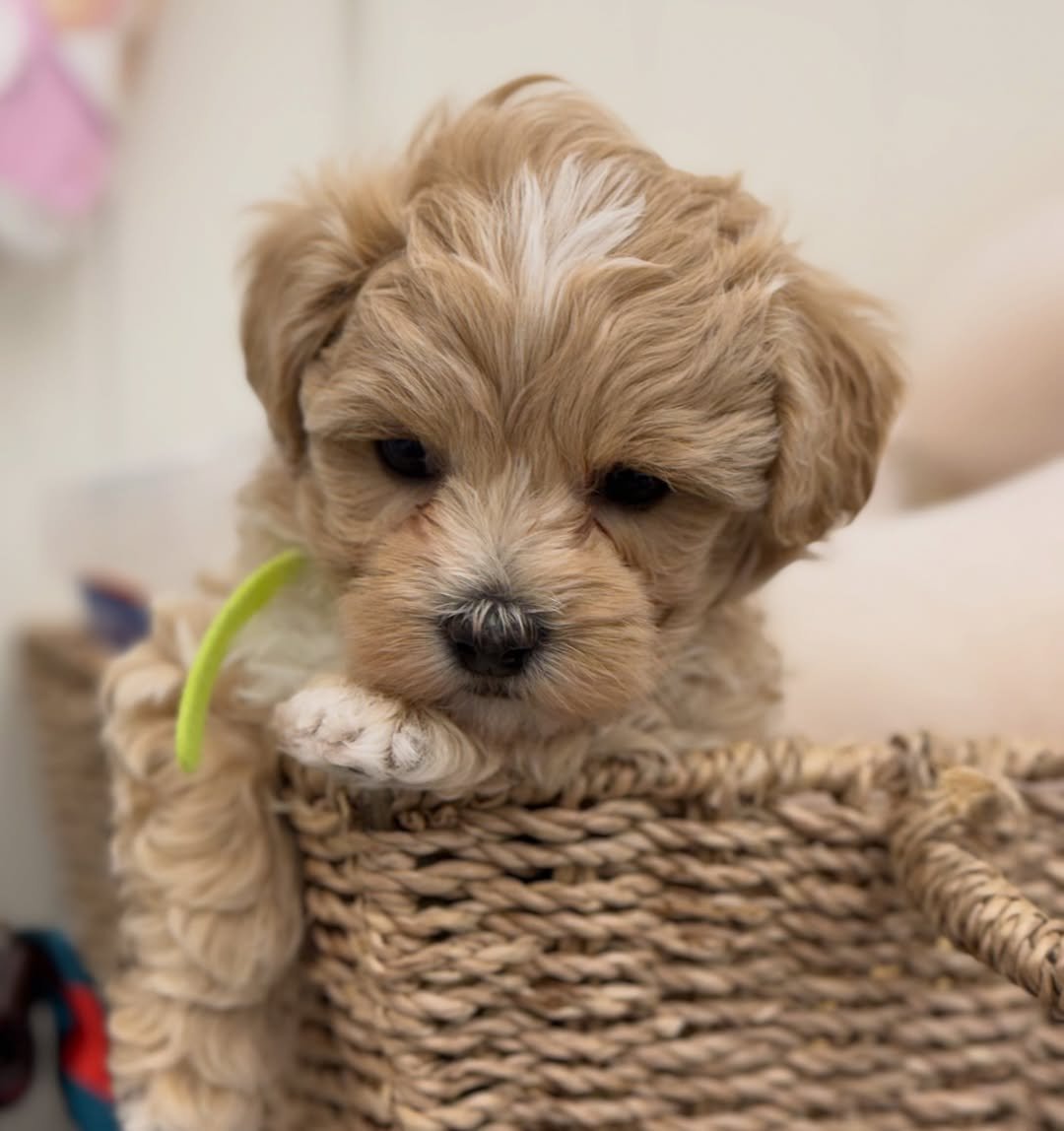
A note from us: We send every puppy home with their health records, microchip paperwork, a small bag of their current food, and a scent cloth from the litter. It helps more than you'd expect on that first night.
The first night
Most puppies cry the first night. That's not a problem you've caused — it's a puppy who's never slept alone before. Here's how to get through it without losing your nerve (or your sleep).
Keep it calm on the way home
Bring someone with you so one person can focus on the puppy in the back. No loud music, no stopping off anywhere — just straight home. The car journey is already a lot for them.
Let them explore at their own pace
Put them down in one room and let them sniff around. Don't overwhelm them with everyone at once. Give them 20 minutes to get their bearings before the excited kids pile in.
Crate near your bed, not across the house
The first few nights, keep them close. Hearing you breathe genuinely helps. You can gradually move them to where you want them to sleep once they're settled.
Don't rush to soothe every whimper
There's a difference between settling cries and genuine distress. Constant reassurance can accidentally teach them that crying gets attention. Give them a chance to settle first.
A warm water bottle can help
Wrap a hot water bottle in a blanket and tuck it under their bedding. Not too hot — lukewarm. It mimics the warmth of their littermates and often settles them down surprisingly quickly.


3–4
meals per day
under 12 weeks
Feeding your Maltipoo
Small dogs have small stomachs and fast metabolisms. Little and often is the rule, especially in the first few months. Skipping meals or overfeeding are both easy mistakes to make.
We'll send them home on the same food they've been eating here. Stick to it for at least two weeks before introducing anything new. When you do switch, do it gradually over 7–10 days.
| Age | Meals per day | Portion size |
|---|---|---|
| 8–12 weeks | 4 meals | Follow pack guide for breed weight |
| 3–6 months | 3 meals | Increase gradually as they grow |
| 6–12 months | 2–3 meals | Adjust for their adult weight |
| 12 months+ | 2 meals | Switch to adult food formula |
Foods to avoid completely
Grapes, raisins, chocolate, onions, garlic, macadamia nuts, xylitol (found in sugar-free gum and some peanut butters) — these are all toxic to dogs. Keep them well out of reach.
Where — and how — they sleep
Puppies sleep a lot — up to 18 hours a day. Where they sleep matters, and getting it right early makes everything else easier. The goal is for them to see their sleeping space as a good place, not a place they get put when they're in trouble.
Crate training from day one
Don't wait until there's a problem to introduce the crate. Feed them in it, put treats in it, make it a place they wander into voluntarily. The door stays open until they're comfortable.
Consistency beats everything
Same place, same routine, same time. Puppies are creatures of habit. A consistent bedtime routine — last toilet trip, into the crate, lights down — helps them wind down faster each night.
Night-time toilet trips in the early weeks
At 8–10 weeks old they genuinely cannot hold their bladder all night. Set an alarm for 2–3am for the first couple of weeks, take them outside quietly, and put them straight back. No fuss, no play.
Don't let bed-sharing become the default
We're not judging — plenty of people do it happily. But decide early, because a Maltipoo who sleeps on your bed for six months will not quietly accept being moved. It's much easier to loosen the rules than tighten them.
Vet visits & health basics
Your puppy leaves us with their first vaccinations done, microchipped, flea and worming treated, and health-checked by our vet. Here's what you'll need to follow up with in the coming months.
Within 48 hours
New owner health check
Take them to your registered vet for a general check-up. This is part of our health guarantee and also gives you a chance to ask any early questions. Bring their paperwork.
2 weeks after collection
Second vaccination
We'll have given the first — your vet will administer the second. Until both vaccinations are complete, avoid contact with unvaccinated dogs and don't put them on the ground in public areas.
Monthly until 6 months
Flea & worming treatment
We'll send them with their first treatments applied. Continue monthly with vet-recommended products. Supermarket brands vary in quality — ask your vet what they recommend for small breeds.
6 months
Neutering discussion
The timing of neutering is something to discuss with your vet based on your puppy's development. There's no single right answer — your vet will advise what's best for their size and health.
Annually
Booster vaccinations
Yearly boosters are essential to maintain immunity against parvovirus, distemper, leptospirosis, and other serious diseases. Make it a habit to check their annual schedule.
Frequently Asked Questions
A slicker brush and a metal greyhound comb are the essentials. Start gently brushing them for a few minutes daily to get them used to the process before their coat demands heavier maintenance.
Generally, one to two weeks after their final set of puppy vaccinations. Until then, you can carry them outside to help with socialization, but they shouldn't walk on public ground where other dogs go.
If you decide to change their kibble after the first few weeks, mix 25% of the new food with 75% of the old food for a few days. Gradually increase the ratio over 7-10 days to avoid upsetting their stomach.
Still feeling unsure?
Don't worry! We provide lifetime support for all our puppies. Drop us an email or a call if you have any lingering questions about preparation.